


Learn why Tostada con Tomate is the most essential morning ritual in Spain and how to order it like a local.
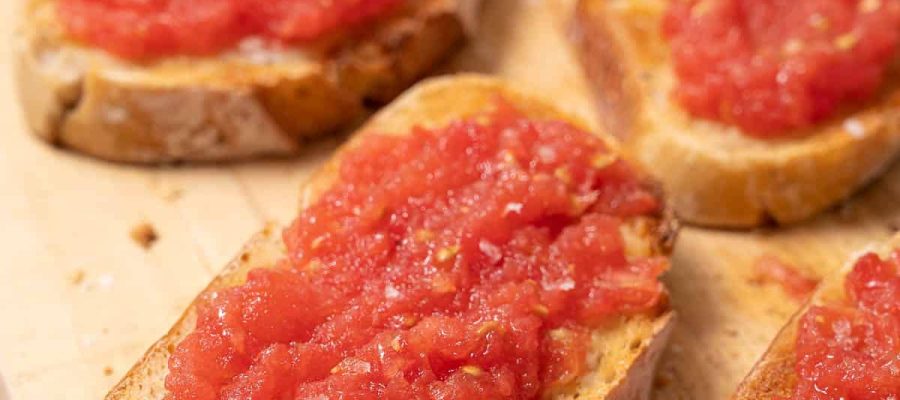
Forget pancakes, heavy fry-ups, or sugary cereals. If you want to understand the soul of Spain, you have to start your day at a local bar with a Tostada con Tomate.
This simple, healthy, and incredibly delicious breakfast is more than just food; it is a sacred daily ritual. Whether you are in a bustling street in Madrid or a quiet village in Andalusia, the sound of the toaster and the smell of fresh coffee define the Spanish morning. It is the moment when the neighborhood wakes up, and for an expat, it is the best time to observe the rhythm of local life.
What Exactly is a Tostada con Tomate?
At its core, it is a piece of toasted bread—but not just any bread. Depending on where you are in Spain, the base changes, but the soul remains the same. It is topped with:
Freshly Grated Tomato: Freshly crushed tomatoes, usually prepared that very morning. In a true Spanish bar, you will never see canned sauce.
Extra Virgin Olive Oil (EVOO): The “liquid gold” of Spain. This isn’t just a garnish; it is the star of the show.
Sea Salt: A pinch to bring the acidity of the tomato and the fruitiness of the oil to life.
Optional Garlic: For those who want an extra kick. Many locals rub a raw clove of garlic directly onto the warm, crunchy toast before adding the rest.
The Regional Architecture of Toast
One of the most fascinating things about moving to Spain is discovering that breakfast has its own “geography.” If you want to eat like a local, you need to know your bread:
The Mollete: A soft, round, pale bread from Antequera (Andalusia). It’s arguably the king of breakfast breads because it stays soft on the inside while getting perfectly crispy on the outside.
The Pitufo: Literally translating to “Smurf,” these are small, palm-sized buns typical in Málaga. Perfect if you aren’t feeling too hungry.
The Pan de Cristal: Common in Catalonia and the Mediterranean coast. It is a thin, ultra-crunchy bread with large air pockets, perfect for soaking up olive oil.
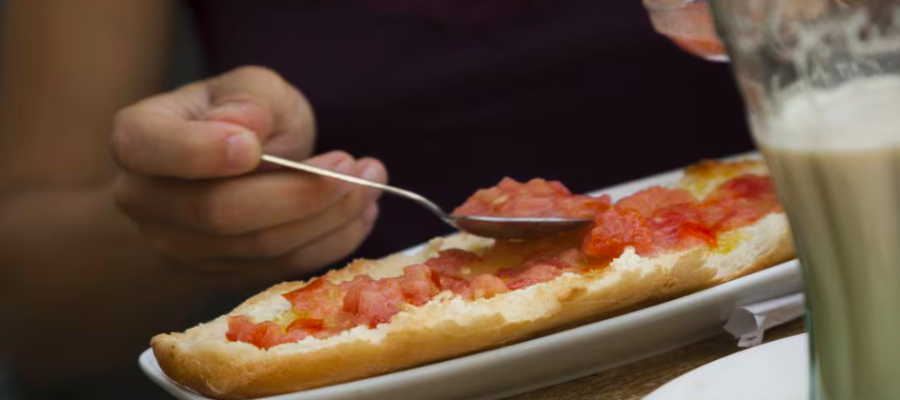
The Pan de Barra: The classic Spanish baguette, sliced lengthwise. Simple, reliable, and found in every corner of the country.
The Art of Ordering Like a Local
Authentic Spanish bars are fast-paced environments. To get exactly what you want without the waiter breaking their stride, keep these tips in mind:
1. The Portion Size
“Una Media”: A half portion (one side of the bread). Usually enough for a light start.
“Una Entera”: A whole portion (both sides). For when you have a long day of exploring or residency appointments ahead.
2. The Customization
While tomate y aceite is the gold standard, you can level up:
“Con Jamón”: Adding a layer of thin, salty Jamón Ibérico makes it a luxury meal.
“Mixta”: In some regions, this means adding ham and cheese.
“Ajo aparte”: If you want the garlic on the side to rub it yourself.
3. The Coffee Pairing
Your tostada needs a partner. Most Spaniards choose:
Café con Leche: Half espresso, half steamed milk.
Cortado: Espresso with just a “cut” of milk.
Manchado: Mostly milk with just a “stain” of coffee (perfect for those who want a milder taste).
Why it’s the Healthiest Choice
In a world of processed breakfast bars and high-fructose corn syrup, the Spanish tostada is a nutritional powerhouse. It is a core pillar of the Mediterranean Diet:
Heart Health: Packed with healthy monounsaturated fats from the olive oil.
Antioxidants: Tomatoes are rich in lycopene, which is actually better absorbed by the body when paired with healthy fats like olive oil.
Sustained Energy: Unlike the “sugar crash” you get from croissants or cereal, the complex carbs in the bread and the fats in the oil provide steady energy until lunch (which, remember, isn’t until 2:00 PM in Spain!).
Is it expensive to eat breakfast out in Spain?
Not at all! In 2026, a “Desayuno Completo” (Tostada + Coffee + Orange Juice) usually costs between €3.50 and €5.50, depending on the city.
Can I get gluten-free tostadas?
Yes! Most modern cafes in Spain now offer “Pan sin gluten,” although you might pay a small supplement (approx. €0.50).
When is breakfast time in Spain?
While bars open early, the “prime time” for the breakfast break (el desayuno) is usually between 10:00 AM and 11:30 AM.
Ready to start your Spanish life?
If you are planning your move to Spain and need help with the lifestyle transition—from finding the best neighborhoods to handling your residency—we are just a message away.